
In just four short chapters, Ruth's story packs a punch. She starts as a foreigner in tough times but ends up changing history. Her tale shines with loyalty that sticks, redemption that heals, and a faith that leads to big things. Think about it: this Moabite woman joins the family line of King David. That puts her right in the path to Jesus. Who is Ruth in the Bible? She's proof that God sees heart over background.
Section 1: Context and Origins: Who Was Ruth Before Bethlehem?
The Moabite Identity and Cultural Contrast
Ruth came from Moab, a land east of the Dead Sea. Moabites shared roots with Israelites but often clashed with them. The Bible notes in Deuteronomy 23:3 that Moabites faced limits in Israelite worship for ten generations. This made Ruth's choice stand out. She crossed lines many wouldn't. Her story shows how God breaks down walls. As a Moabite, Ruth lived in a world of pagan gods and family ties. Yet she yearned for more. Her move to Israel highlighted the gap between her old life and the faith she embraced.
The Tragedy of Naomi and Elimelech
Famine hit Judah hard back then. Elimelech, his wife Naomi, and their two sons left Bethlehem for Moab to find food. Life seemed better at first. The sons married local women: Orpah and Ruth. But joy turned to sorrow. Elimelech died. Then both sons followed. Naomi stood alone with two widows. She heard good news from home—famine ended. Time to head back. This loss set the stage for Ruth's big step. It tested family bonds in deep pain.
Understanding the Marriage Covenant: Ruth and Mahlon
In ancient times, marriage meant more than love. It tied families and futures. Ruth wed Mahlon, one of Naomi's sons. This union linked Moabite and Israelite worlds. When Mahlon died young, Ruth became a childless widow. Options were slim. She could remarry in Moab or stay tied to Naomi. The covenant echoed deeper values like care and promise. Ruth's later actions showed that bond ran deep. It fueled her path to faith and purpose.
Section 2: The Defining Act of Loyalty: The Vow to Naomi
The Heartbreaking Decision to Return to Judah
Naomi decided to go home to Bethlehem. She urged her daughters-in-law to stay in Moab. "Go back to your mothers' homes," she said. "Find new husbands there." Orpah hugged Naomi and left in tears. But Ruth clung tight. This split showed real choice. Orpah picked safety and family roots. Ruth chose the unknown with an older widow. Why leave comfort? Her heart pulled her toward Naomi's God. That decision marked her as loyal beyond blood.
Ruth’s Unforgettable Declaration of Allegiance (Ruth 1:16-17)
Ruth's words hit like thunder. "Don't urge me to leave you," she told Naomi. "Where you go, I will go. Where you stay, I will stay. Your people will be my people. Your God will be my God." She added, "Where you die, I will die. And there I will be buried." These lines ooze commitment. "Your people" meant leaving Moab behind. "Your God" showed a shift in worship. "I will die" sealed it with life-or-death stakes. This vow inspires even now. It teaches us to stick close in hard times.
The Journey Back to Bethlehem and the Hardship Faced
The road home stretched long and rough. Two women, no men, no money. They arrived at barley harvest time. Bethlehem buzzed with work. But outsiders like Ruth faced stares and struggles. Naomi called herself bitter, like Mara. Poverty loomed large. Ruth would need to work the fields. Yet hope flickered. God timed their steps just right. Arrival meant new starts amid old pains. Challenges built their grit.
Section 3: Gleaning and Grace: Ruth's Perseverance in the Fields
The Custom of Gleaning and Economic Necessity
God set rules for the poor in Leviticus 19:9-10. Farmers left edges of fields ungleaned. They dropped sheaves on purpose. Widows, orphans, and strangers could pick what fell. This law showed care for the needy. Ruth stepped up. She told Naomi, "Let me go to the fields and gather grain." Her plan fed them both. It honored the law while fighting hunger. Ruth's initiative turned need into action.
Boaz: The Kinsman-Redeemer Introduced
Ruth ended up in Boaz's field by chance—or God's plan. Boaz owned vast land and followed God close. He spotted Ruth right away. "Who is this young woman?" he asked. Workers praised her work for Naomi. Boaz welcomed her. He told men to leave extra grain. "Drink from our jars," he said. Ruth bowed low in thanks. Boaz saw her heart. His kindness flowed from faith.
Lessons in Humility and Favor
Ruth asked little but got much. She ate with workers at noon. Boaz loaded her apron with barley. That night, she threshed six measures of grain. Humility opened doors. Boaz called her a woman of noble character. Favor came unasked. Think of it like planting seeds. Ruth's quiet work bloomed into blessing. Her story urges us to serve without show. God notices the humble.
Section 4: Redemption, Marriage, and Legacy in Israel
Navigating the Kinsman-Redeemer Obligation
The go'el, or kinsman-redeemer, fixed family woes. Mosaic Law in Deuteronomy 25 outlined it. A relative bought back land or married a widow to keep the line going. Levirate rules protected names and property. Naomi saw Boaz as a redeemer. She coached Ruth to approach him. This step aimed to secure their future. It mixed law, love, and legacy. Ruth trusted the process.
The Negotiation at the City Gate
Boaz acted fast. At the town gate, he met the closer kin. Elders sat as witnesses. "Want to buy Naomi's land?" Boaz asked. The man agreed. Then came the twist: "You must marry Ruth too." That changed things. The kin gave up his sandal as sign. Boaz claimed the right. Cheers rose from the crowd. This public deal sealed hope. It showed community in redemption.
Ruth's Transformation: From Moabite Outsider to Ancestor
Boaz married Ruth soon after. Joy filled their home. She bore Obed, a son who brought light to Naomi. Neighbors blessed the child. Ruth went from stranger to family pillar. Her outsider status faded. God wove her into Israel's story. This shift proves faith changes everything. From fields to home, her path led to purpose.
Ruth's Place in the Royal Genealogy
Obed grew strong. He fathered Jesse. Jesse raised David, Israel's great king. Matthew 1:5 lists Ruth in Jesus' line. Her blood flows to the Messiah. A Moabite widow shapes eternity. This legacy stuns. God picks the unlikely for big roles. Ruth's faith echoes through ages.
Section 5: Enduring Lessons and Actionable Faith for Today
Following God Through Unfamiliar Territory
Ruth left Moab for Judah's unknown. You might face your own big moves. Commit to God's people, even if it scares you. Join a church or group that follows Him. Leave old habits behind. Her step built a life of meaning. Ask yourself: What comfort do I need to drop? Faith grows in new ground.
The Power of Integrity and Diligence in Service
Ruth worked fields from dawn. She didn't slack. Integrity shone in every sheaf. Active faith beats empty words. Show up daily in your job or home. Diligence opens doors, like it did for her. List three ways to serve better this week. Her ethic inspires real change.
The Principle of Divine Sovereignty and Provision
God used Boaz to provide. Ruth stayed faithful; He moved pieces. Trust His timing in your needs. Human kindness often carries His hand. Stories like this remind us: God honors loyalty. Pray for eyes to see His work. Provision comes to the steadfast.
Conclusion: The Everlasting Echo of Ruth's Faith
Ruth's journey from Moab's fields to David's line shows God's power. Loyalty to Naomi led to redemption with Boaz. Her faith outshone her origins. This tale proves devotion matters most. God builds legacies on faithful steps.
Key takeaways include:
- Practice loyal love in daily ties to honor God.
- See tough times as steps to His plans.
- Choose faith over culture for true belonging.
- Embrace humility to receive and give grace.
The story of Ruth calls us to bold steps in faith. Let her challenge you to live with her kind of hesed. Turn from what holds you back and step out in trust today, as you follow God with all you have.
Bible References to Ruth: Every Mention and Key Locations in Scripture
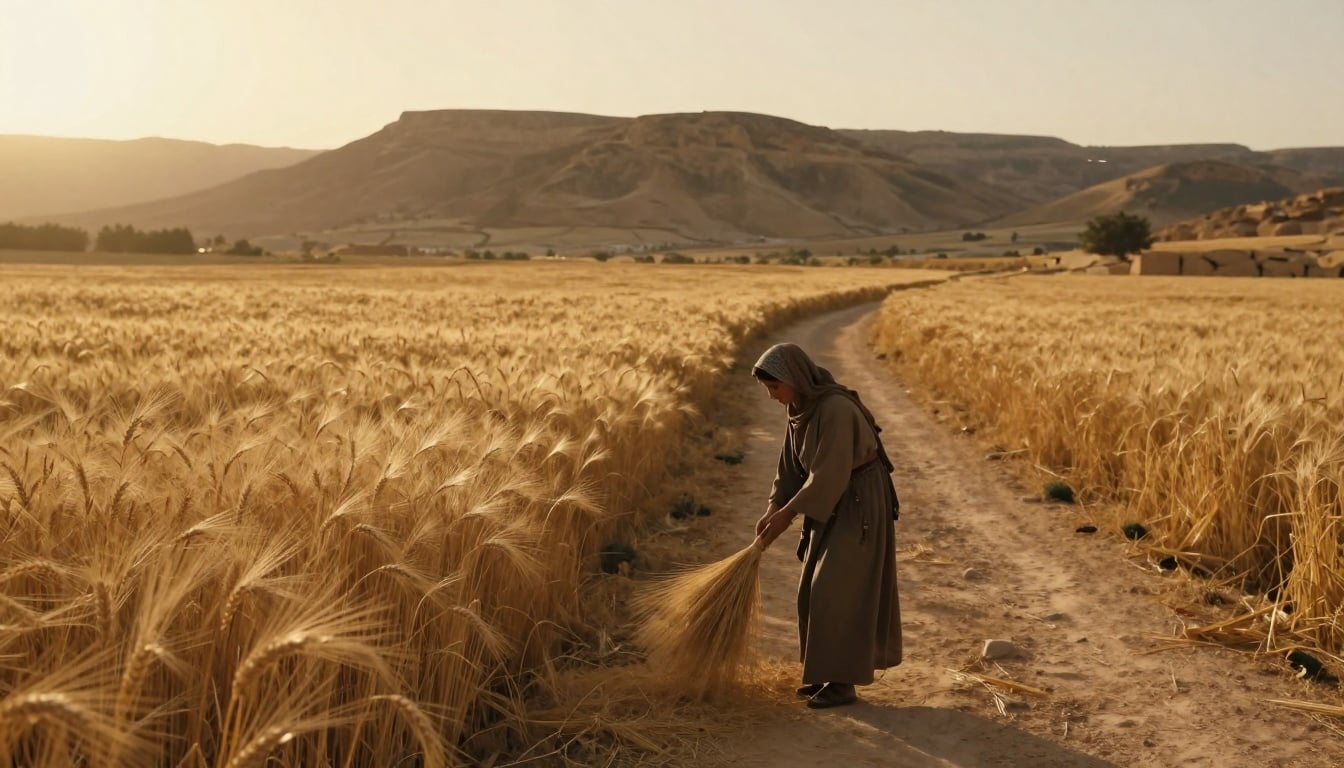
In the heart of the Old Testament, Ruth stands out as a woman of deep loyalty. She starts as a foreigner from Moab but becomes a key figure in Israel's story. Her tale shows how God turns loss into blessing, linking her to King David and even Jesus. Set during the time of the judges, a rough era of chaos, the Book of Ruth offers hope. It highlights themes like family ties and divine care. Readers often wonder: how does this short book fit into the bigger Bible picture? Let's explore every spot where Ruth appears and the places that shape her path.
The Genesis of Ruth: Key Mentions in the Book Bearing Her Name
The Book of Ruth takes center stage for her story. This four-chapter gem sits in the Writings section of the Hebrew Bible. It tells of Ruth's bold choices amid grief. We see her grow from a widow to a wife in God's plan.
Ruth Chapter 1: From Moab to Bethlehem
Famine hits Judah, pushing Elimelech, his wife Naomi, and their sons to Moab. They settle there, but tragedy strikes. Elimelech dies, then the sons marry local women, Orpah and Ruth. After ten years, the sons pass away too, leaving Naomi alone with her daughters-in-law.
Naomi hears good news back home. She urges the women to stay in Moab and find new husbands. Orpah agrees, but Ruth clings to her. This choice marks Ruth's first big step of faith.
Key Verses Highlighting Ruth’s Famous Pledge of Loyalty
Ruth 1:16-17 captures her words: "Where you go I will go, and where you stay I will stay. Your people will be my people and your God my God." She vows to die where Naomi dies. These lines echo through time. They show hesed, a Hebrew word for steadfast love. Ruth picks Naomi over comfort. Her pledge binds her to Israel forever.
This chapter sets the stage in Moab's dusty plains. The family flees Bethlehem's empty fields. Ruth's decision flips her life upside down. She trades her homeland for an unknown future.
Ruth Chapter 2: Gleaning and the Introduction to Boaz
Back in Bethlehem, barley harvest time arrives. Ruth heads to the fields to gather leftover grain. This act of gleaning keeps her and Naomi fed. She picks Boaz's land by chance—or was it God's hand?
Boaz notices her hard work. He offers protection and extra food. Ruth's kindness to Naomi catches his eye. He blesses her for leaving idols behind.
Explain the Cultural Significance and Legality of Gleaning Rights in Ancient Israel
Gleaning came from God's laws in Leviticus 19:9-10. Farmers left edges of fields for the poor. It ensured no one starved. Ruth, as a widow and outsider, relied on this custom. Boaz goes beyond, sharing his own meal. This practice built community bonds. In Ruth's day, it highlighted God's care for the vulnerable. Her story shows how obedience to law sparks bigger blessings.
Fields buzzed with workers under the sun. Ruth bent low, tying sheaves. Boaz's arrival changes everything. He calls her "daughter" and shields her from harm.
Ruth Chapters 3 & 4: Redemption and Marriage
Naomi sees Boaz as a close relative. She tells Ruth to approach him at the threshing floor. Ruth follows, uncovering her feet at his side—a sign of trust. Boaz praises her virtue but notes a closer kin.
He settles the matter at the town gate. The other man declines, so Boaz redeems Naomi's land and marries Ruth. Their son, Obed, brings joy. He becomes grandfather to David.
Analyzing the Specific Laws of Levirate Marriage and Redemption Alluded to in the Narrative
Levirate rules from Deuteronomy 25 aimed to keep family lines alive. A relative married the widow to raise an heir. Here, Boaz acts as go'el, the redeemer. He buys back land per Leviticus 25. This blend of laws protects the poor. Ruth's marriage restores Naomi's line. It points to God's bigger rescue plan. Scholars note how these customs weave justice with mercy.
The threshing floor hums with winnowed grain. Ruth's quiet wait tests her faith. Boaz's honor shines through. Their union seals redemption.
Beyond the Book: Ruth's Mentions in the Historical and Prophetic Writings
Ruth's story doesn't end with her book. She pops up in later texts, tying her to Israel's kings. These nods show her lasting role in history.
Ruth in the Genealogies of 1 & 2 Chronicles
Chronicles retells Israel's past with focus on worship. In 1 Chronicles 2:4-12, Ruth enters Judah's line through Perez. She's listed as Boaz's wife, mother of Obed.
This genealogy traces from Adam to David. Ruth bridges Moab to Judah's throne.
Compare the Structure of the Chronicler’s Genealogy Versus Earlier Patriarchal Lists to Emphasize Ruth's Inclusion
Genesis lists focus on fathers like Abraham. Chronicles expands, naming mothers too. Ruth stands out as a Gentile. Earlier lists skip women often. Here, she's vital, showing God's wide reach. This shift highlights temple ties in post-exile Judah. Ruth's spot affirms outsiders' place in promise.
Lines of names fill chapters. Ruth's entry feels personal. It connects everyday folks to royalty.
Ruth’s Significance in the New Testament: The Lineage of Christ
Matthew 1 opens Jesus' genealogy. Verse 5 names "Boaz the father of Obed, whose mother was Ruth." She's fourth in a list of women, all with bold stories.
This inclusion stuns. A Moabite in the Messiah's line? It fulfills prophecy.
Examining the Theological Weight of Including Ruth (a Moabite) Alongside Figures Like Tamar and Rahab in Christ’s Ancestry
Tamar tricked for justice, Rahab hid spies. Ruth chose loyalty. These women faced shame yet God used them. Matthew spotlights grace over bloodlines. Ruth's Moab roots echo Deuteronomy's curses lifted by faith. It previews the gospel for all nations. Theologians see this as proof: salvation ignores borders.
Jesus' family tree surprises. Ruth's branch leads to the cross. Her faith echoes in eternity.
Geographical Context: Places Central to Ruth's Journey
Ruth's tale roots in real spots. These locations ground her choices in history.
Bethlehem-Judah: The Homeland of Faith
Bethlehem nestles in Judah's hills, south of Jerusalem. It's small but key—David's birthplace. In Ruth's time, it faced famine yet held promise.
Archaeology uncovers Iron Age homes there. The town gate buzzed with deals, like Boaz's redemption.
Mentioning Relevant Old Testament Descriptions of Bethlehem Prior to the Book of Ruth
Genesis 35:19 notes Rachel's death near there. Judges 17-19 shows moral mess, yet Ruth brings light. Micah 5:2 later calls it Messiah's origin. This spot shifts from sorrow to song. Fields around it fed the hungry.
Hills roll gently. Olive trees dot the view. Bethlehem welcomes wanderers.
The Fields of Moab: The Starting Point
Moab lies east of the Dead Sea, rugged and fertile. It's Lot's descendants' land, often at odds with Israel.
Ruth leaves its green valleys for Judah's uncertainty. The Jordan River marks the border she crosses.
Contextualizing the Relationship Between Israel and Moab During This Historical Period
Judges era saw raids and pacts. Moab oppressed Israel once (Judges 3). Yet Ruth's family fled there for life. Her choice breaks old hates. Numbers 22-25 tells of Moab's failed curse. God turns foes to family.
Arid cliffs rise sharp. Jordan's waters rush below. Moab holds Ruth's past.
The Enduring Theological Themes Associated with Ruth
Ruth's mentions reveal deep truths. Her path teaches on God’s hidden work.
Faith, Loyalty, and Alien Status
Ruth crosses lines few would. She adopts Naomi's God amid grief. Israelite laws welcomed strangers (Exodus 22:21). Her story lives this out.
We see hesed in action—love that sticks.
Actionable Takeaway: How the Modern Reader Can Apply Ruth’s Model of Steadfast Loyalty (Hesed) in Contemporary Contexts
Stick with friends in tough times. Offer help without strings. Like Ruth, choose people over ease. In families or jobs, show up daily. Build bridges across divides. Her example fits today's world—loyalty heals rifts.
Questions arise: Who needs your pledge now?
Redemption and Divine Providence
From empty fields to full arms, God moves quietly. Boaz redeems, but God orchestrates. Ordinary steps lead to David's line.
Loss turns to legacy.
Expert Reference Note: Brief Allusion to Theological Commentary Emphasizing God's Use of Gentile Figures in Salvation History
Commentators like Walter Brueggemann note Ruth previews the church. Gentiles join Israel's story. From her to the nations' call in Isaiah. God picks the unlikely for big plans.
Winds whisper through grain. Providence hides in plain sight.
Conclusion: Ruth's Place in the Pantheon of Biblical Women
Ruth shines among Bible heroines like Esther and Mary. Her mentions span the Book of Ruth, 1 Chronicles 2, and Matthew 1—four books total. Key spots like Moab and Bethlehem frame her walk.
She births David's line, touching kings and Savior. Jewish tradition reads her at harvest feasts. Christians see grace in her outsider status. Her legacy? Faith wins over fear.
Key Takeaways:
- Ruth appears in the Book of Ruth, 1 Chronicles, and Matthew's genealogy.
- Her journey links Moab's fields to Bethlehem's hope.
- She forges the Davidic line, echoing through history.
Dive into the word of God today. Let the life of Ruth inspire your steps.
What part of her story calls to you? Share in the comments.↴